Cruise ship design has evolved far beyond just creating beautiful spaces. Today, the most successful interiors are the ones that work harder, adapt faster, and move effortlessly with the rhythm of guest life onboard.
Curating fluid spaces that flow
Modern passengers no longer experience a ship in the same fixed ways that they used to.
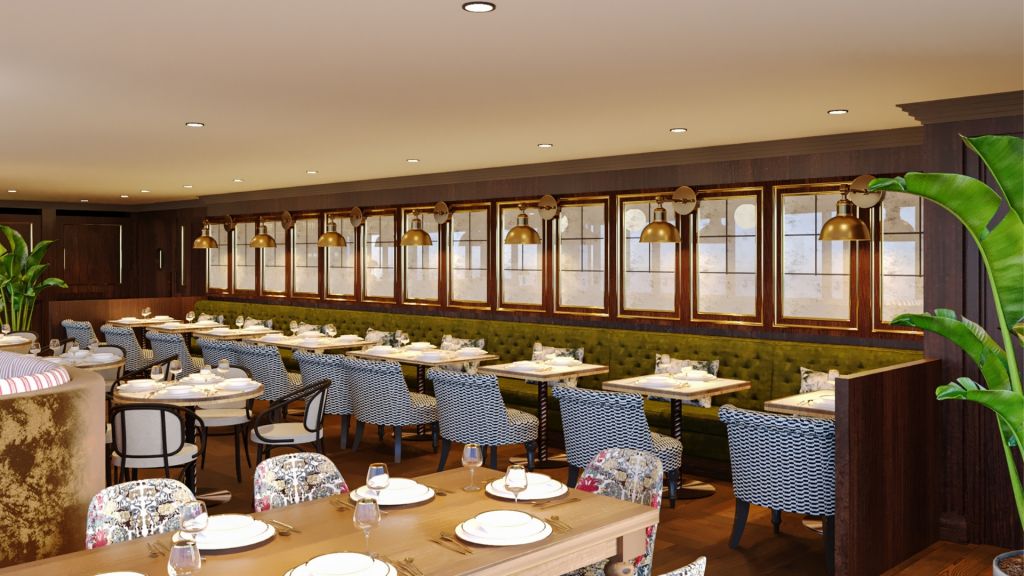
The café that feels calm and restorative over a morning coffee becomes a vibrant bar at night. A lounge designed for relaxed daytime conversation later transforms into an intimate dining area. As guest expectations continue to evolve, flexibility is no longer a luxury in marine design; it’s essential.
The challenge lies in creating spaces that shift seamlessly throughout the day without losing their identity or atmosphere, and this is where commercial intelligence must work hand-in-hand with thoughtful design.
Maximising space without compromising
At sea, every square metre matters.
Spaces need to maximise both guest experience and operational performance, whilst still feeling intuitive, elegant, and of course emotionally engaging. The most successful environments are those that adapt almost invisibly:
- lighting softens
- acoustics deepen
- furniture layouts evolve
All of this combined curates a space where the entire mood of a space transitions naturally from one moment to the next.
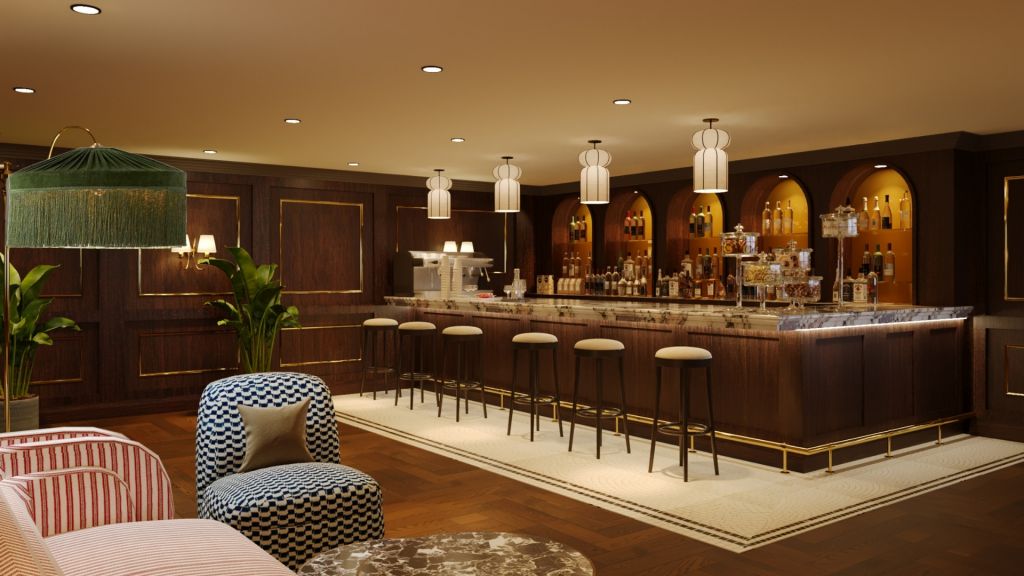
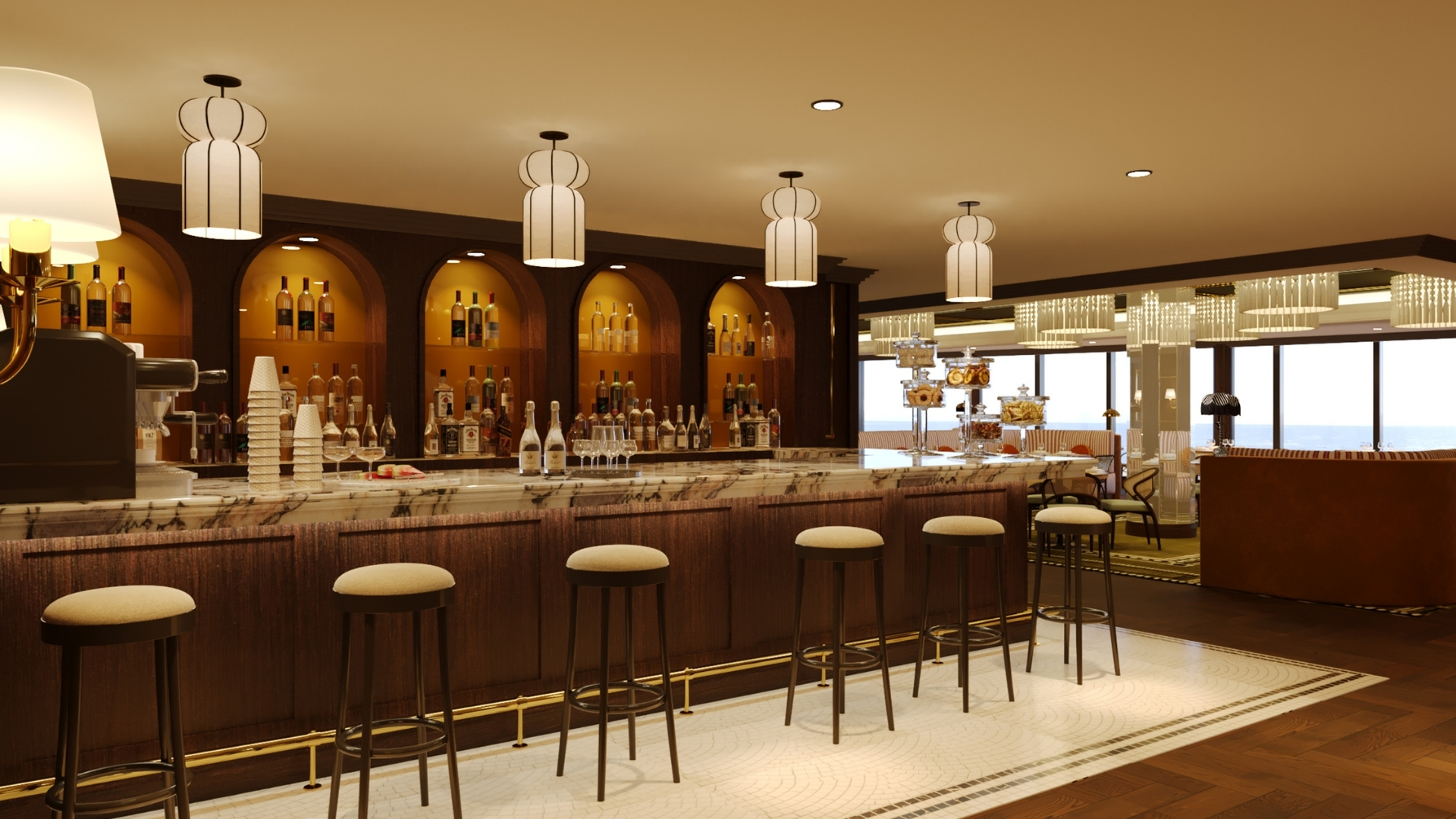
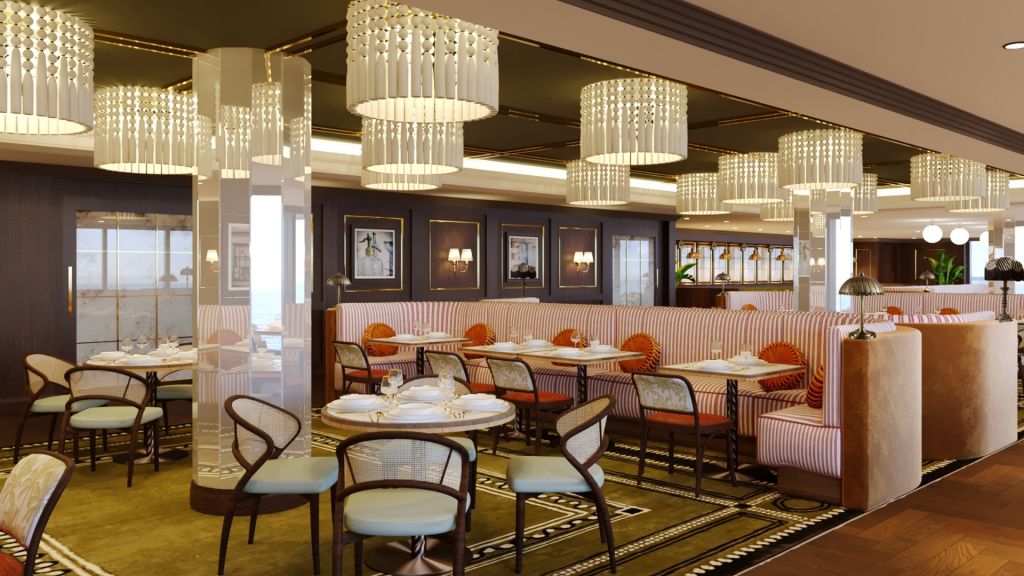
Parisian Cafe; an Aspinall Marine design
We’ve created a beautiful concept inspired by this concept; our timeless Parisian café.
Effortlessly versatile, this space balances functionality with atmosphere. It welcomes slow mornings, busy afternoons, and lively evenings with equal ease.
It never feels forced or overly designed, and there is a confidence in its simplicity. From layered textures and ambient lighting to elegant colours – this concept creates a space that people want to return to throughout the day and into the night.
Evolving the passenger experience
Guests are looking for experiences that feel fluid rather than programmed; spaces that evolve with them rather than asking them to adapt.
Design must therefore becomes less about fixed purpose and instead more about creating environments that support changing behaviours and emotional needs over time.
Technology and operational planning also play an important role. Flexible layouts, adaptable lighting schemes, and multi-functional furniture all allow operators to respond quickly to guest demand whilst maintaining a cohesive aesthetic experience. However, the real success lies in ensuring these transitions feel effortless from the guest perspective; unnoticeable even.
Carrying guests from day to night
Ultimately, great marine design is not simply about creating beautiful destinations onboard. It’s about creating spaces that live and breathe alongside the people using them.
As cruise experiences become increasingly experience led, the future belongs to interiors that are not only dynamic and emotionally intelligent but also commercially considered; to us this looks like spaces that can carry guests from sunrise coffees to late night conversations all without ever losing their sense of place.
The best spaces at sea are never static; they evolve with every hour of the day.